
Foam Packaging
Small Cavity Foam Trays – ESD Foam Trays – Industrial Packaging
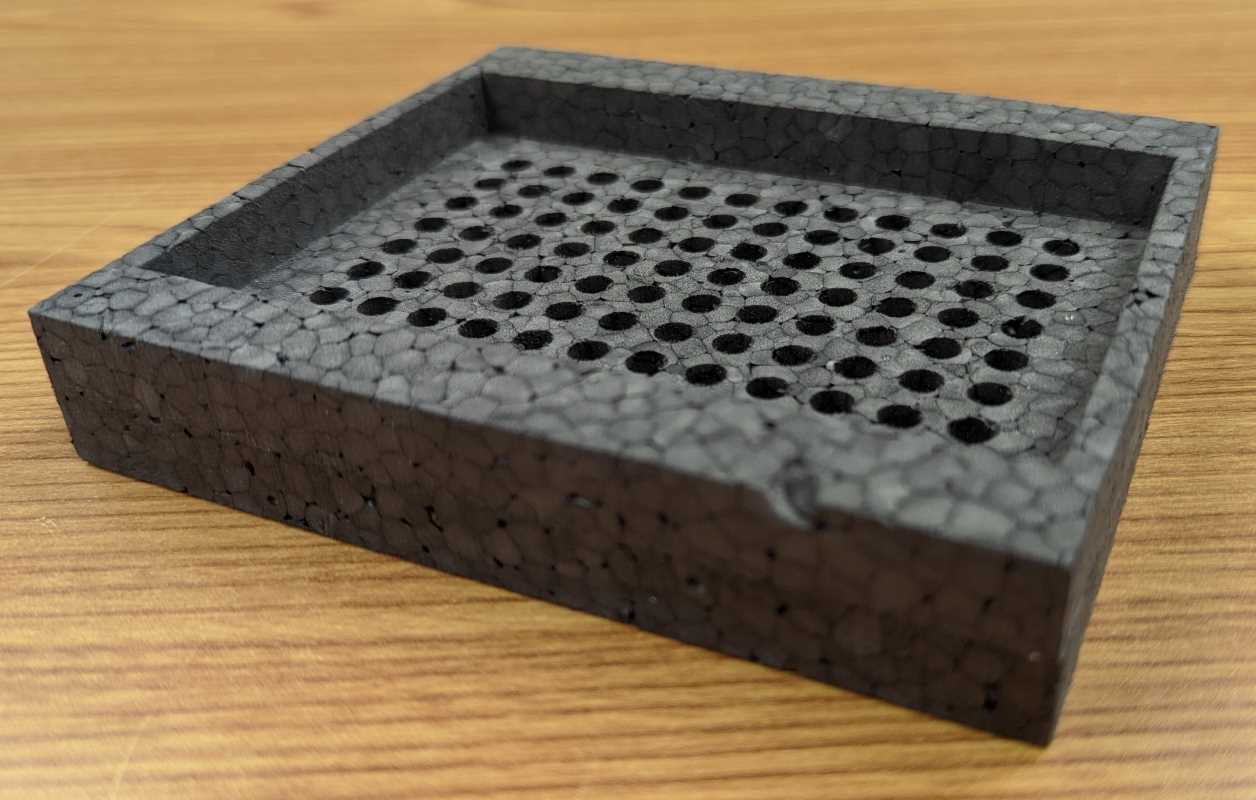
EXAMPLE 1) EPE Foam Tray Black for small circular or cylindrical part. The material is abrasion resistant rated for Class A painted surfaces.
______________________________________________________________
FEATURES of Foam Packaging below. Trays for INDUSTRIAL PARTS & ELECTRONICS.
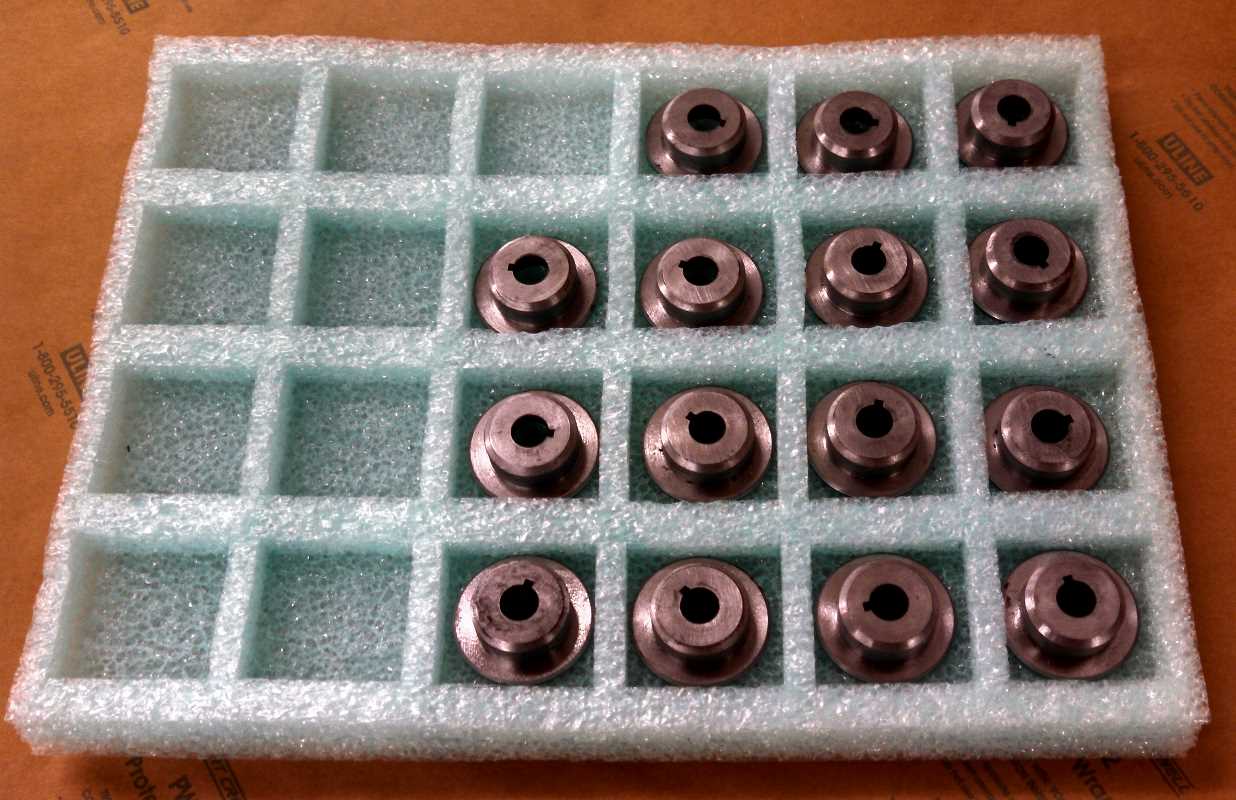
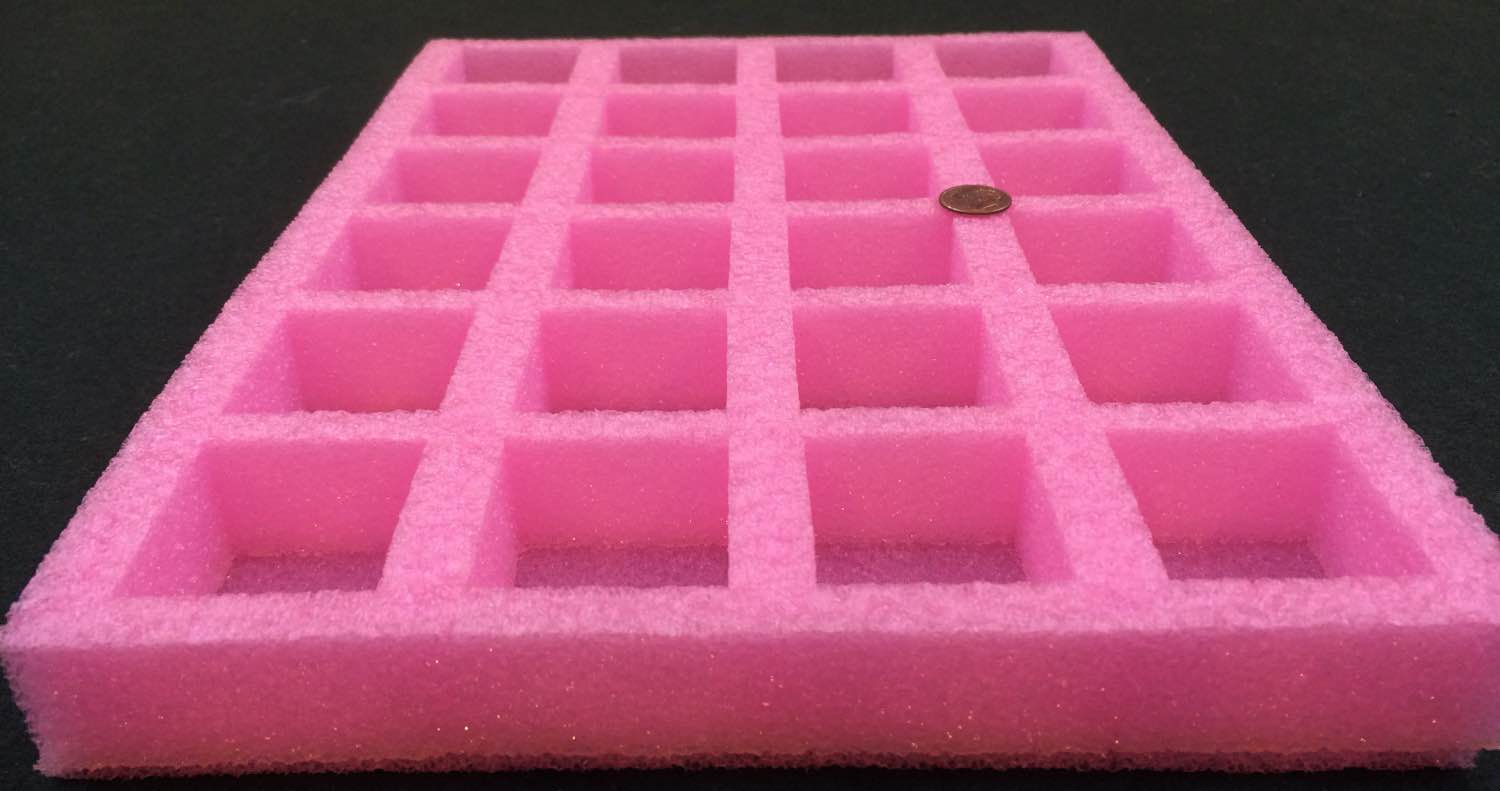
Outstanding Protection – Foam packaging offers a high level of protection from shock for small fragile parts such as glass vials, glass tubes, bottles, machined stainless steel parts, ESD boards, ESD components, and fragile painted parts. Small cavity trays are sized to fit the specific application limiting movement, reusable, with good cushioning properties.
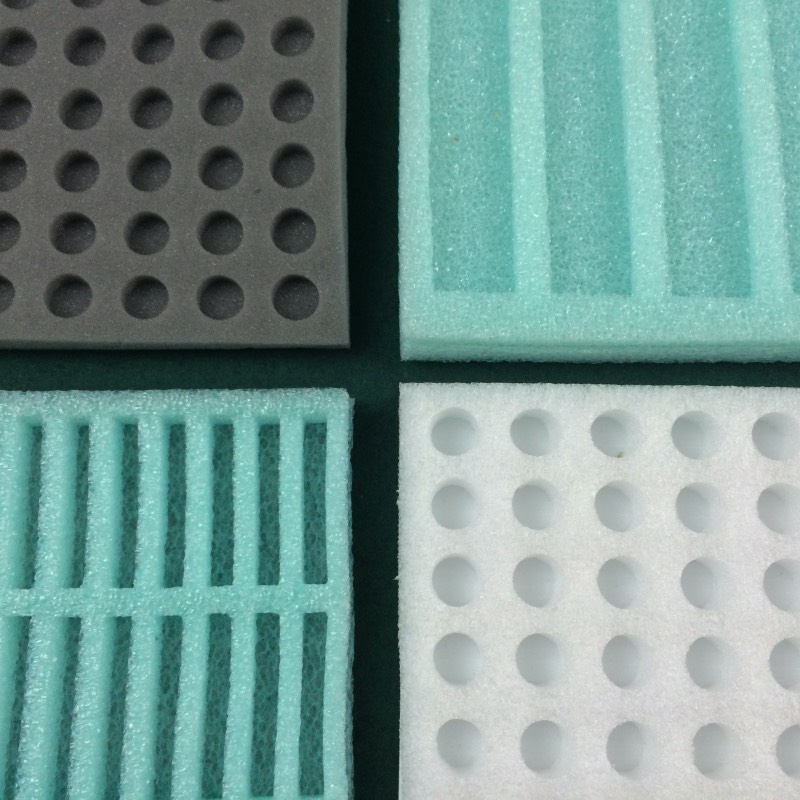
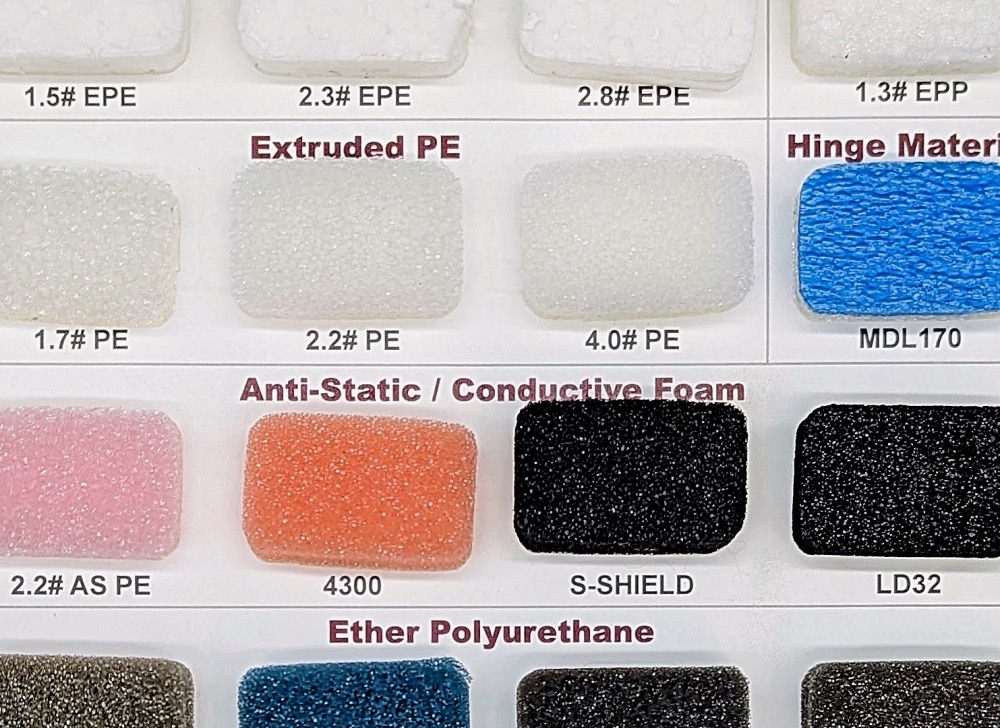
Material Options – Multiple material options are available including ESD foams(for small and medium size electronics and circuit boards), Beaded EPE foam(rated for use with Class A surfaces), Dense foam(for solid trays which can support weight). Contact a customer service specialist for assistance or see Page shown below for more details.
Custom Trays – NRE Only $ 95 for a custom size foam tray. Our customer service specialist will assist with material selection, tray design. Behind the scenes we will determine cushioning requirements, and make vibration assessments as needed; but the best qualification method is samples.
Custom Shapes – Cavities can be any shape needed in order to protect part during shipping or plant handling. Foam inserts for boxes can also be made in place of a foam or plastic shipping tray. Foam tray cavities can be much deeper than a thermoform cavity, and also can match unusual shapes leaving clearance for fragile areas. Custom trays made with CNC technology for a wide range of inexpensive custom cavity options.
Reusable – Foam storage and shipping trays, depending on material choice, are frequently reused. PE, and EPE foams, along with other material options are durable and long lasting and can support heavier parts if taken into account in the design. Plastic corrugated bases are often used to support weight.
Samples – Foam shipping tray samples are available for product testing, vibration testing, and ship tests before we produce any trays.
______________________________________________________________
IMAGE LINKS BELOW
Foam Material Information
ESD Foam Packaging
______________________________________________________________
Custom Foam Packaging Trays: Frequently Asked Questions
1. Why should I choose custom foam trays over standard off-the-shelf plastic trays?
Standard trays often provide a poor fit, leading to part movement and potential damage. Custom-cavity foam trays are engineered to the exact geometry of your part, providing 360-degree protection. The primary advantage is superior energy absorption; unlike rigid plastic, foam dampens vibration and shock during transit, making it the ideal shipping solution for sensitive machined parts.
2. I have a low-volume project; isn’t custom tooling too expensive?
Not with foam. While vacuum-form or injection molds can cost thousands of dollars, our process features a disruptive $95 NRE (Non-Recurring Engineering) tooling charge. This low entry cost makes custom packaging accessible for startups, bridge production, and specialized low-volume manufacturing runs.
3. What is EPE foam, and when should I use it?
EPE (Expanded Polyethylene) is a beaded foam known for its high energy absorption and excellent anti-abrasive characteristics. We recommend EPE when you are shipping parts with highly polished “Class-A” surfaces, delicate finishes, or sensitive optical components that cannot risk scuffing or marring.
4. Can you provide protection for static-sensitive electronics?
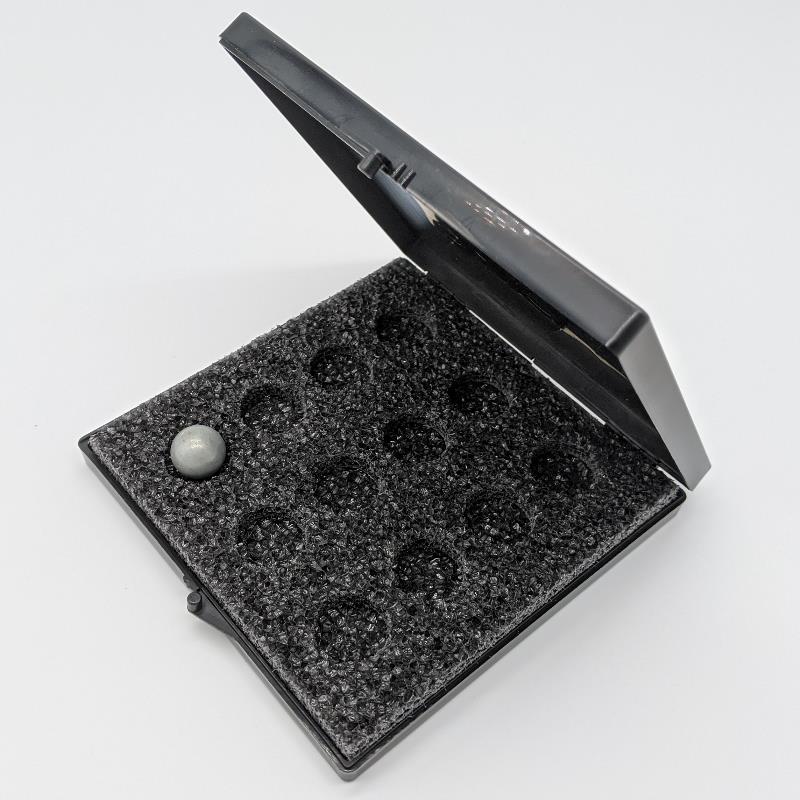
Yes. We offer ESD-safe foam inserts specifically designed for the electronics industry. These materials are carbon-impregnated or surface-treated to dissipate static electricity, ensuring that PCBs, sensors, and semiconductors remain protected from both physical impact and electrostatic discharge.
5. What are the limitations regarding cavity shapes?
These are CNC Waterjet cut so almost any 2D custom-shaped cavities geometry is available, from simple rectangular pockets to intricate nested designs for robotic end-effectors.
6. Is your foam suitable for medical or cleanroom environments?
For medical diagnostics and laboratory hardware, XLPE (Cross-Linked Polyethylene) is often used. It is a closed-cell foam, chemically inert, and has extremely low water absorption. It provides a clean, professional aesthetic suitable for many medical component handling and sterile environment packaging. The customer, though, needs to determine their specific requirements and suitability.
7. How durable are foam trays for long-term storage?
For heavy-duty applications or long-term industrial storage, we use high-density Polyethylene (PE) foam. These trays have high structural integrity and have high density options. The foam can be as sturdy as a piece of wood at high denstities.
8. Can I use these trays for “Shadow Boarding” and inventory control?
Absolutely. Many quality engineers use our trays for 5S Shadow Boards. By using a “two-color” foam laminate (e.g., a black top layer over a bright red base), you can instantly identify when a tool or component is missing from its station, improving workflow and quality control. Or just use the same concept for identification trays.
9. How do I provide the design for my custom cavities?
Our engineering team is flexible. We can work from 3D models, 2D technical drawings, or even physical samples of your parts. Because our NRE cost is only $95, we can rapidly iterate and provide prototypes much faster than traditional plastic molding companies.
View our ECP Custom Foam Tray Buyer’s Guide